The Lyndeborough Fire Department was dispatched to a fully involved barn fire at 0556 on March 30. A 2nd alarm was requested at 0602 with mutual aid companies from Greenfield and Francestown being requested. A 3rd alarm was struck at 0604 bringing mutual aid from Deering, Wilton, Greenville, Mt Vernon, Peterboro and Bennington. The fire was under control at 0810.
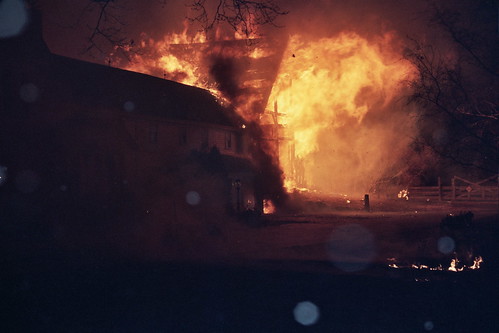
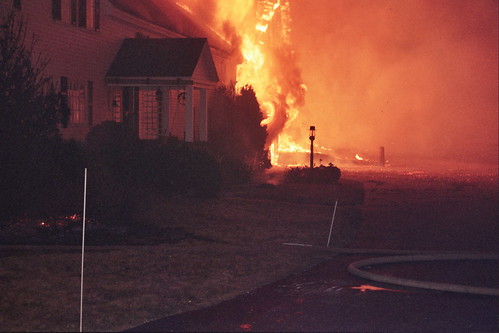
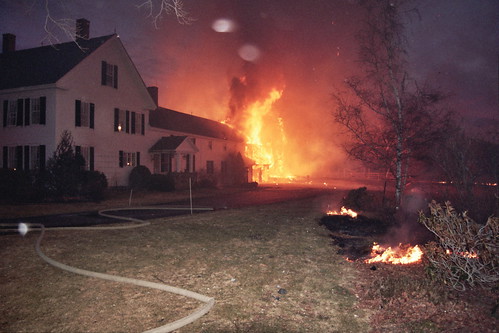
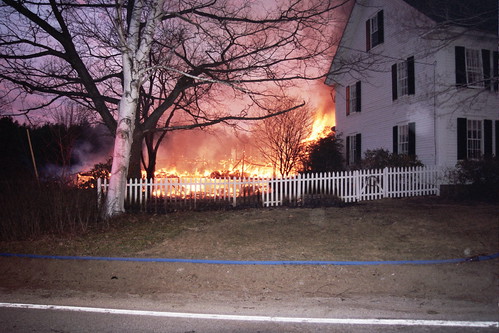 Photos provided by Mickey Leavitt
LP Gas leak in Peterborough, NH
Peterborough Fire Department was dispatched to an LP gas odor in the area of the Peterborough Plaza on Wilton Road at 0818. A second alarm was struck at 0836 bringing Mutual Aid departments to the scene from Dublin and Jaffrey. Meadowood and Hancock covered the Peterborough Station. Rindge covered the Jaffrey station.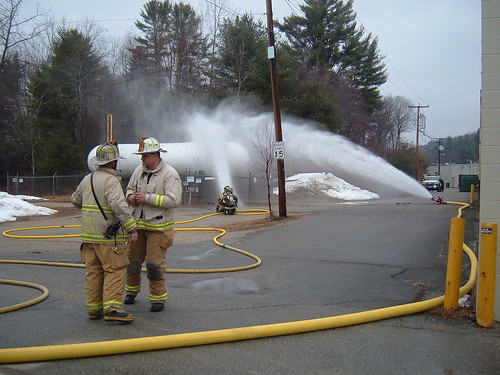
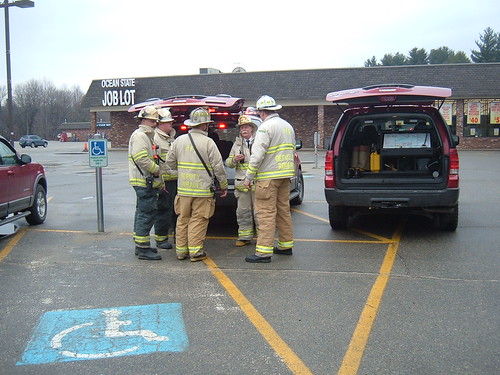
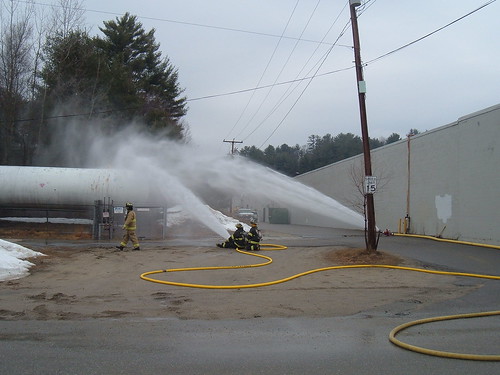
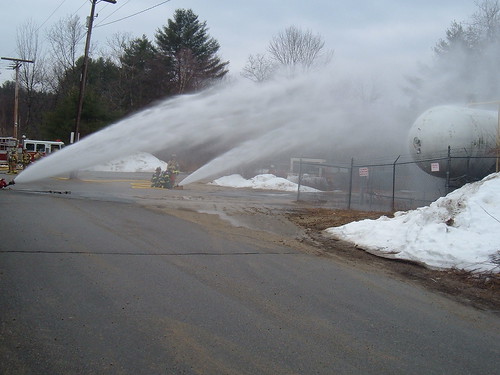 All photos by George Brown
Heartline Stove Shop Fire
Jaffrey Fire Department responded to a reported building fire on North Street at 0450 March 22, 2007. 4 minutes into the call a second alarm was requested for a fully involved building fire. Additionally 5 extra tankers were requested.
Jaffrey was assisted at the scene by mutual aid companies from Dublin, Peterboro, Rindge, New Ipswich, Fitzwilliam, Meadowood, Hancock, Harrisville, Troy, and Winchendon. The Greenville Fire Department covered Jaffrey, and Ashby covered Rindge.
The fire was declared under control at 0658
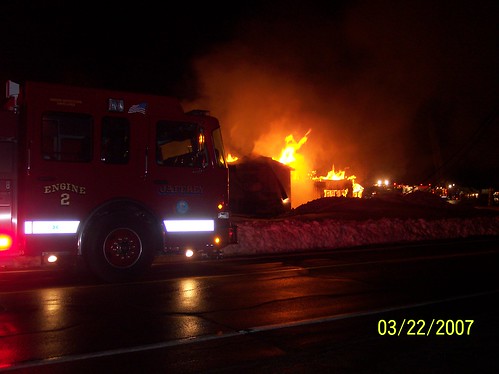 Photo by Ron Clace
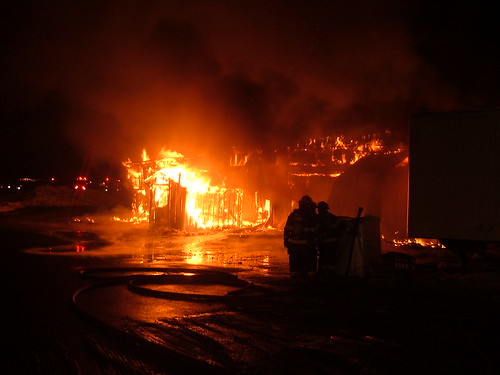
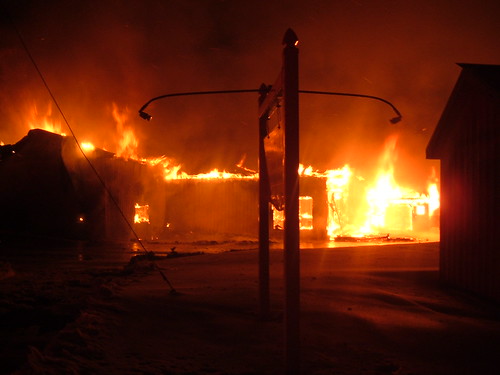 Photo by George Brown
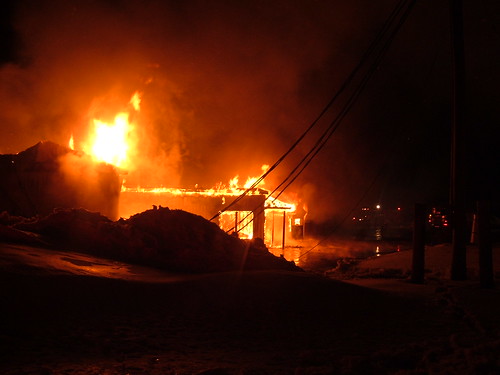 Photo by George Brown
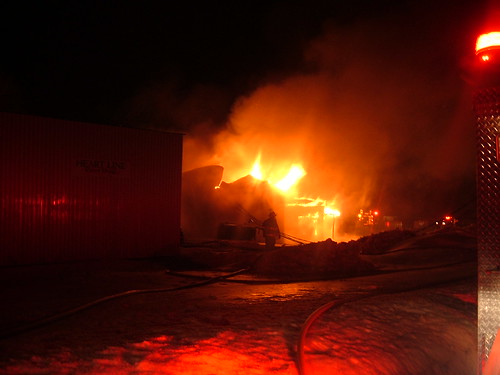 Photo by George Brown
2 alarms on arrival in Walpole.
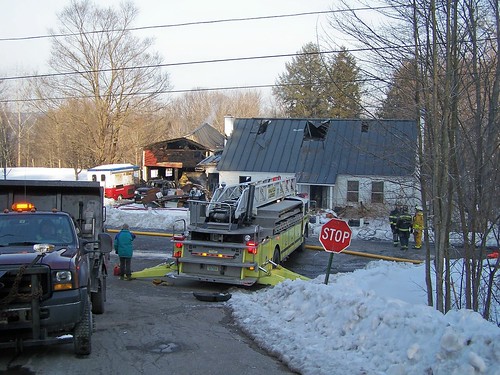
At 0241 hrs dispatch took a call of a reported house fire across from 29 North River Rd. Units arrived on scene to find heavy fire in a 2 story house with attached garage and requested a 2nd alarm.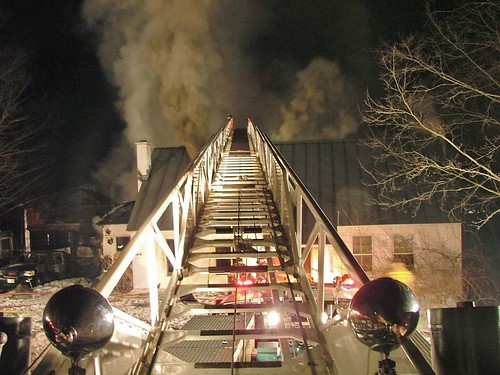 Two 2 1/2 lines were streched to attack the garage, and 2 1/34 lines were stretched in the house. Crews on the roof found themselves dealing with a metal standing seem roof that had been put over a asphalt shingled roof with about a 8 inch gap between the two. The interior crews dealt with 4 different layers of ceiling which hampered the firefighting efforts for quite awhile.The fire was under control in just a little over an hour. Crews from Westminster,Bellows Falls assited on scene while North Walpole covered the Wapole station. Two firefighters received minor injuries while operating at the fire.
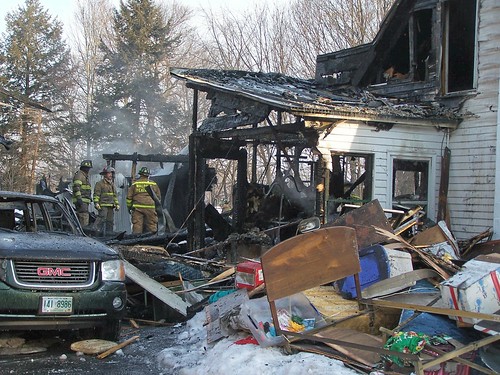
Keene reponds to CVS for a car into the building.
On Friday at around 12:27 dispatch began taking calls for a report of a car into the building at 268 West St the CVS Pharmacy. 19 Rescue 1 and 19A2 along with 19C3 arrived to find a mini-van about 3 feet into the building. While the crew from the ambulance checked on the driver,the crew from the rescue began to evacuate the building and check on the structure. Crews found an odor in the building and requested that 19 Ladder 2 to the scene. Crews checked the building and the roof and determined the odor was from the tires of the van when it spun of the sidewalk. Units remained on scene for about an hour before clearing.

 Photo's by Dispatcher Collier.
Double Fatal in Charlestown,Nh.
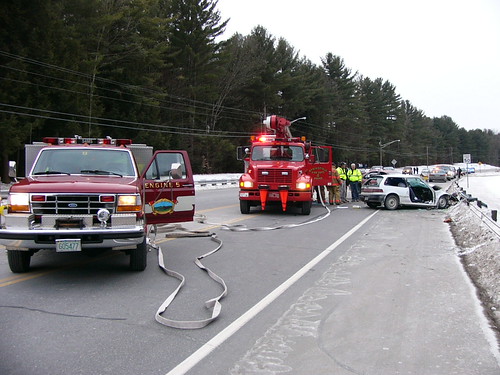
On February 7th at 15:47hrs, Dispatch began receiving calls for a 2 car mva Rt 12 in front of Welen Eng with entrapment.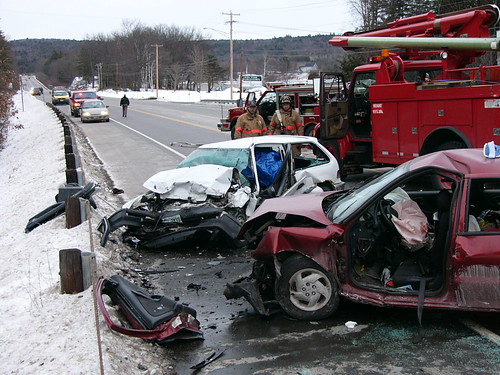
First arriving units found 2 cars with heavy damage and entrapment with a total of 3 patients ,2 critical and 1 DOA. At that time Command(Chief Stoddard) requested jaws from Springfield and Bellows Falls Fire Departments and both DHART helicopters.With all hands committed an engine out of North Walpole was requested to assit with the landing zone.
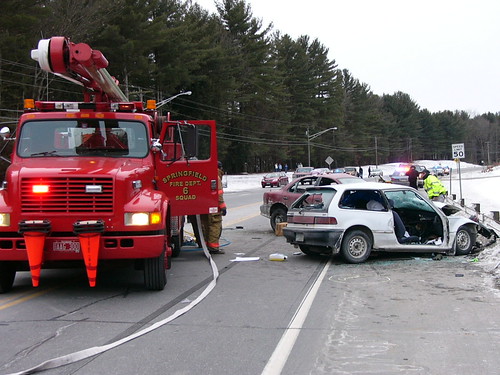
Dispatched has been advised that the driver of the other vehicle died a few days later.
Mayday Policy
Southwestern New Hampshire District Fire Mutual Aid System Standard Operating Guideline
Subject: Mayday ---Rescue of Lost/Distressed Firefighter
Purpose: To identify the procedures for the Communication Specialist to implement in the declaration of a MAYDAY incident, a report trapped or lost firefighters.
Scope: The rescue of trapped or lost firefighters in a burning or collapsed building is especially time sensitive. There is a very narrow window of survivability for a firefighter who is out of SCBA air supply and trapped by approaching fire or heavy structural members. Additionally, it is extraordinarily difficult to control the well intentioned actions of would be rescuers. However, the risks and disadvantages associated with not controlling the fire ground activity effectively during this time cannot only hinder the operation; it may actually contribute to firefighter fatalities. Therefore it is vital for dispatch to work as a team with Command to take appropriate actions and make concise decision to increase survivability. This policy is designed to prepare all personnel on what actions to take in case a MAYDAY is declared while they are on duty.
Policy: 1. Declaring a MAYDAY:
1.1 The radio message “MAYDAY†will be used by lost or trapped firefighters to report their status as being in trouble and needing rescue. This message will be transmitted from the distressed firefighter on the tactical channel to Command. Command will notify Dispatch on the dispatch frequency.
1.2 If the distressed emergency responder cannot communicate verbally, the portable radio Emergency button shall be activated.
1.3 By the company officer, group or division officer, or other member who cannot account for an assigned firefighter who is operating in the hazard zone. This “MAYDAY†would generally occur following a PAR that fails to locate/account for the suspected lost member. PAR stands for Personnel Accountability Roll, a procedure used in conjunction with the incident organization chart and the Personnel Accountability System to verify the accountability of all personnel on the scene of an incident.
1.4 By a member who witnesses or has confirmed that a firefighter is lost or in trouble.
2. Communication Specialist Responsibilities:
2.1 Command will advise that a “MAYDAY†has been declared and provide a brief progress report.
2.2 Dispatch will put an alert tone (#2 on console) out on tactical frequency (if possible) and advise all personnel a “MAYDAY†has been declared and only radio traffic pertinent to the incident will be permitted. The alert will also be broadcast over the dispatch frequency to advise personnel. Assigned an additional tactical frequency for all other radio traffic not related to the MAYDAY incident.
2.3 A communication Specialist will be assigned to monitor the tactical channel of the MAYDAY Event. If frequency is no in console use the Astro Radio in the center of console.
2.4 Immediately notify Command of radio emergency button activation and treat as a MAYDAY event until proven otherwise. Provide all pertinent information known about the unit I.D.
2.5 If the firefighter comes up on an unassigned channel, Command shall be advised and Dispatch shall remain with the firefighter on that channel. Never Ask the Firefighter to Change Channels.
2.6 Immediately dispatch the Next Greater Alarm Assignment including an extra ALS unit and RIT unit. RIT stands for Rapid Intervention Team.
2.7 Notify units when MAYDAY event has been concluded by Command.
Charlestown MVA with Entrapment.
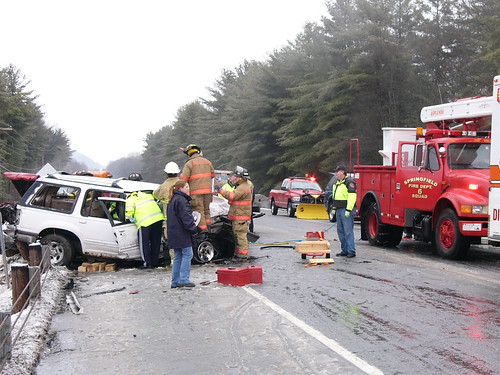 On Jan 15,2007, at 1300hrs The Charlestown Fire Department was dispatched to a report of a motor vehicle accident RT12 in the area of the transfer station. Upon arriving untis they found a Ford Explorer that struck a flat bed wrecker head on with heavy intrapment. At this time The Springfield Fire Department was dispatched for their jaws.
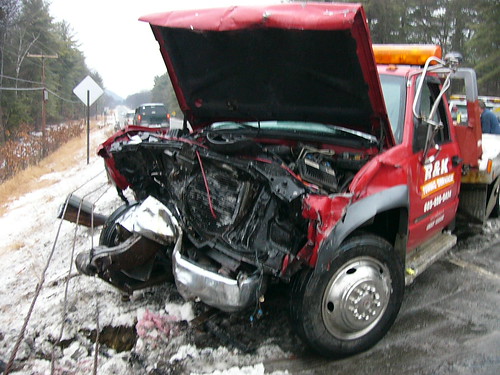 Due to the patient's injuries DHART Helicopter was requested but due to the weather they were unavailable. The patient was transported by The Charlestown Ambulance.
Ledge Road, Hancock, NH
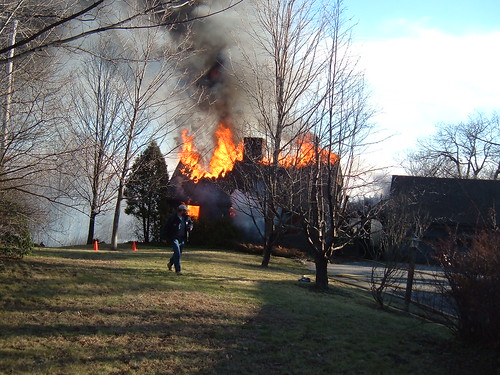 December 21, 2006 at 1341 the dispatch center took a call for a building fire across from 23 Ledge Road.
Hancock was dispatched as a first alarm and additional mutual aid units from Peterboro, Stoddard and Nelson were also started.
At 1346 14C3 requests a 2nd alarm and fire units from Bennington, Stoddard, Dublin, Harrisville, Greenfield, Antrim and MAC1 were sent to the fire scene. Jaffrey, Antrim, Francestown, Temple, New Ipswich, Marlow, and Hillsboro covered stations that had equipment at the fire. The American Red Cross was dispatched to scene for refreshments and care of the property owner. The fire was reported as under control at 1529.
All photos by George Brown.
December 21, 2006 at 1341 the dispatch center took a call for a building fire across from 23 Ledge Road.
Hancock was dispatched as a first alarm and additional mutual aid units from Peterboro, Stoddard and Nelson were also started.
At 1346 14C3 requests a 2nd alarm and fire units from Bennington, Stoddard, Dublin, Harrisville, Greenfield, Antrim and MAC1 were sent to the fire scene. Jaffrey, Antrim, Francestown, Temple, New Ipswich, Marlow, and Hillsboro covered stations that had equipment at the fire. The American Red Cross was dispatched to scene for refreshments and care of the property owner. The fire was reported as under control at 1529.
All photos by George Brown.

Fire Extinguishers
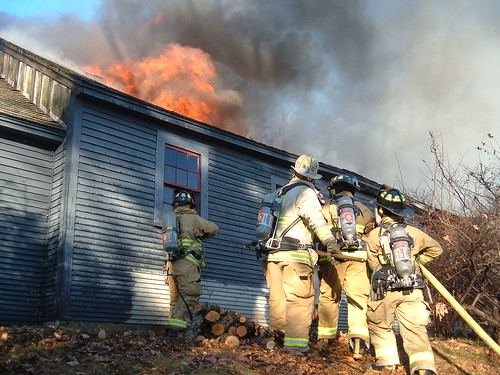
Approximately every 16 seconds a fire department responds to a fire somewhere in the United States. The annual property loss from fire is in excess of BILLION. Roughly every two hours, someone will die in a fire. The proper use of a fire extinguisher may have prevented these mishaps. A fire extinguisher is probably the most common fire protection device available to the employees of your property. Most portable fire extinguishers are designed so that someone with just a little training can extinguish a fire that has just begun to burn. However, if your employee is completely unfamiliar with the proper use or basic understanding of the type of extinguisher, they can make a bad situation worse. Using the wrong type of extinguisher could increase the fire dramatically, endangering other employees and increasing the dollar loss. Employers who provide fire extinguishers should also provide the training necessary to use the extinguisher properly. Proper training is just as important as providing fire extinguishers, if not more so.
Where is the closest fire extinguisher in your area? Do you know how to use it? Look at the symbols on the extinguisher;
An 'A' in a triangle is an extinguisher that will fight ordinary combustibles, such as burning trash or cloth.
A 'B' in a square is an extinguisher that will fight flammable liquid fires, such as grease or oils or gasoline.
A 'C' in a circle is an extinguisher that will fight energized electrical fires, such as burning wires or switches.
A 'D' in a star is an extinguisher that will fight combustible metal fires, such as titanium or magnesium.
Some extinguishers are multipurpose and can fight more than one class of fire. You may see an extinguisher near your work area that has an 'A-B-C' rating on it. This type can fight ordinary combustibles, flammable liquids and electrical fires, but would be of no use on a metal fire.
Kitchens need a fire extinguisher rated at 40-B:C near the grease cook line in addition to a 2-A:10-B:C extinguisher located throughout the kitchen area. All extinguishers shall be conspicuously located where they will be readily accessible and immediately available in the event of a fire. Preferably they will be located along normal paths of travel and within 75' travel distance to any point in the building, as a general rule.
Remembering the word PASS can help you remember how to use the fire extinguisher;
Pull - the safety pin at the top of the extinguisher.
Aim - the nozzle or hose at the base of the fire, standing about 6' - 8' away.
Squeeze - or depress the handle.
Sweep - gently from side to side until the fire is out.
Warn others of the fire, so they may get out of the building, and what is most important, call the fire department before attempting to extinguish a small fire. Should you make the decision to fight the fire, always keep the exit to your back and never let the fire get between you and your way out.
Remember, the extinguisher will only last a few seconds, use it wisely.
Fire extinguishers have to be maintained in order to work properly. They must be serviced on an annual basis or if the gauge on the top of the extinguisher shows a low reading. The tag on the extinguisher shows the last time it was serviced. Of course, if the tag is missing, the extinguisher again needs to be serviced.
Selection of extinguishers depends on the hazards expected. For assistance in purchasing or locating your extinguishers, contact a state certified individual or firm. The Yellow Pages is a great place to start. Many of these companies offer classes on the use of their extinguishers.
Quisque iaculis facilisis lacinia. Mauris euismod pellentesque tellus sit amet mollis.